
Thursday morning I sat down with Karen O'Reilly, who runs the recruitment agency, Employ Flex, here in Clonakilty. Somewhere in the conversation, she used the phrase "authentically flexible" - the difference between a business that says it's flexible and one that actually is. It got me thinking about work, and who really carries the flexibility when a business claims to have it.
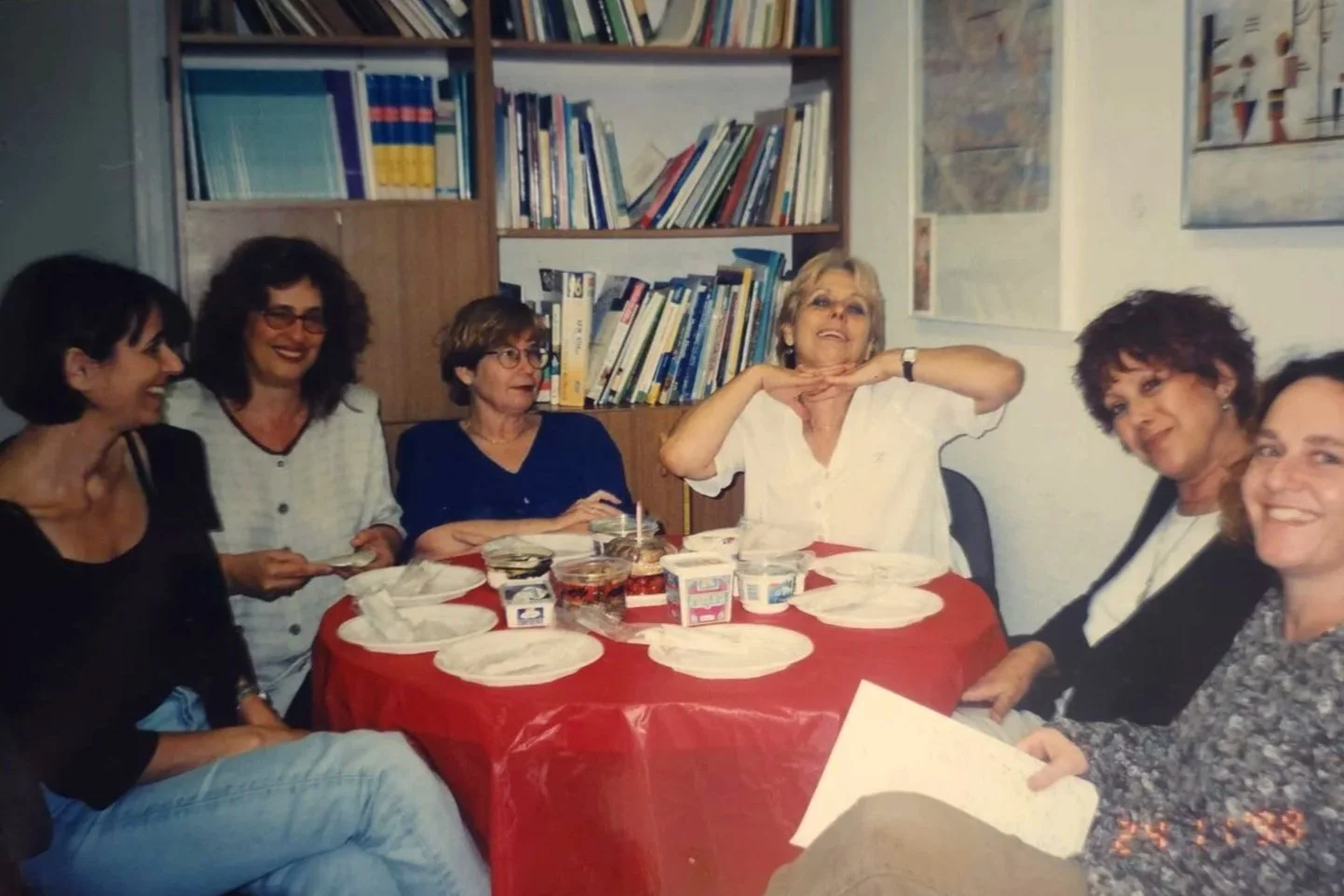
I was reminded how much of my childhood took place in the corridors of my mom's workplace, the Centre for Education Technology.
My mother headed the geography department, publishing books for school kids about human geography. Her team, with a majority of women, wrote books, ran teacher workshops, managed design and print schedules for real books that went into real classrooms.
To get to my mom's room, I pressed the number 4 in the elevator. Turn left and then left again. Passing corridors with many doors, each one leading to a small room where women were working away behind screens, having discussions around small tables about their new book, the Arabic translation, or sharing personal stories from their lives over Turkish coffee with milk.
For a child, the building was a safe labyrinth. Different rooms had different friendly faces, different smells. Each room was a small cosmos spinning around the women: Heli, Ofira, Billie, Iris, Nirit, Sarka - my siblings and I would run between the rooms and the hot drinks machine. Even blindfolded, we would be able to find our way to this machine that provided us with a free, overly sweet hot chocolate. For us, it was the taste of safe independence.
I knew all her colleagues' children's names. We were at each other's family celebrations. And I also knew that my mom's colleagues knew everything about me. And I do mean - everything. If one of the kids got sick, my mom or her teammates would work from home, or move a meeting into their kitchen. Nobody made a poster about it - "we are a flexible hybrid workplace". It just happened, the way the sun rises in the morning.
By the time I was a teenager, I was earning my own money there in the summers - stuffing envelopes, sticking stamps, calling teachers about workshop dates. Not too long after, my mom recruited me to help her team with illustrating and designing her books. I got to be part of the team for a short time and have my own relationships with these women, not just as my mom's daughter.
Sharing these memories with Karen, I started wondering whether that workplace could be called "authentically flexible". It looked like one, but I'm not sure it was; I do know that the women running it were.
I believe that my mom and the other women bent themselves around a job that was never built to bend back. Catching up most weekends, late nights, feeling the pressure of deadlines. I don't think any of them ever counted the hours they worked. My mom was there for me, but at the same time she was never fully there. She had a loyalty to that business, which was paid back not by the business, but by the incredible people she worked with: their love, their friendship, their respect. But the business? It was just a business.
When my mom retired, after spending decades in that building, she suddenly felt unsure of the worth of the long hours and dedication she gave to the business. She said to me: "I thought we were changing the world, but did we really?"
My mom and her team created a reality that understood that women, who are left to care for everyone and everything, need flexibility. They didn't shout about it; they just made it happen. Because of them, I grew up believing it's normal. When I built my own company and ran my own team of incredible women - Eleanor, Grace, Faye, Faustine, Amanda, to name a few - my mantra was: life comes first. Not as a slogan. As the actual order of things. Work is real, and it matters, and it still doesn't replace our families, the life we live outside, and definitely not our health.
Karen gave me a powerful example from our days - in finance, she said, firms can't find accountants anywhere. And yet the ones willing to let people start at 9:30 am and finish at 3:30 pm - just enough to do the school run at both ends - suddenly have access to a whole workforce of very qualified women. Nothing else changes. Just the hours.
It's good to remember that the nine-to-five was never handed down from anywhere sacred. It came out of factories, out of machines that needed tending in shifts. It was built around output, not around how a human day actually moves.
Whether you're hiring, or being hired, or building something from nothing: what would it look like if we designed it around people, from the start - not around the machine, and not around how much a woman can bend before anybody notices the cost.
I'd love to hear your stories.
Photo credit: Nirit Nahum Levi