You can have the best business idea, or even a life-saving invention, but if you can't tell people about it in a way that they can understand, you have nothing. Over the past two decades, I met clients passionate about their business, great at their job, and deeply motivated to get their story out. And despite all that, their message was getting lost.
The world of communication has changed dramatically. Not long ago, if you needed a website or a presentation, you handed it to a designer or an agency, and part of their job was helping you work out what to say. Today you can tell AI to build it for you, in the same tone you tell your kids to tidy their room. This has created an overflow of AI-generated content. Now, more than ever, if you want anyone to hear what you're saying, make sure they know it's directed at them, and get to the point fast; our attention span is short, and the competition for it is fierce. AI might make you the poster, but if you are not crystal clear, that poster will just add to the noise.
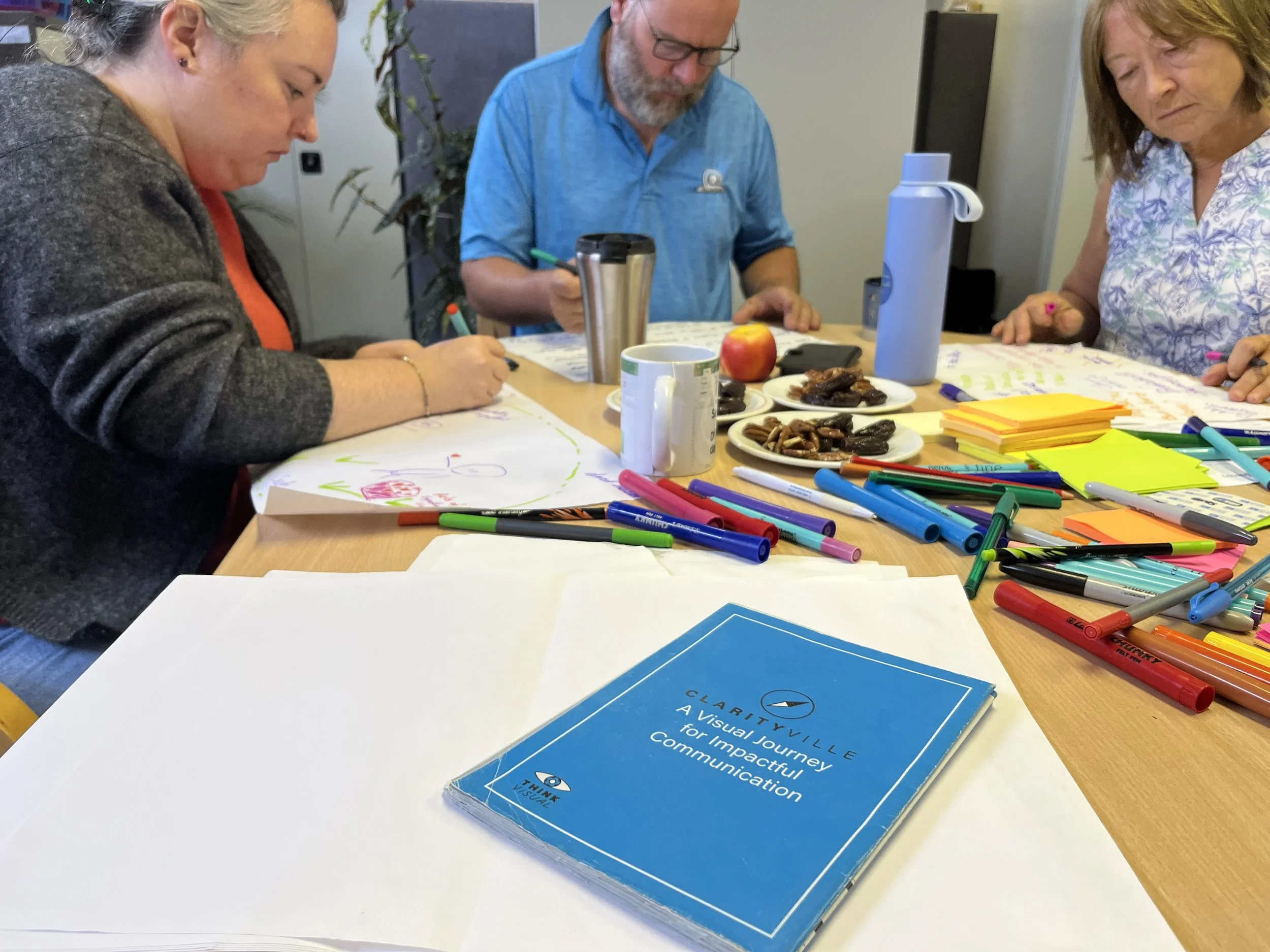
I want to share a small but effective exercise that will help you become a better communicator. It's part of a process I developed and used with every communication client I've had over the last twenty years. This process helped my clients locate the relevant information and share it with the right people. I call it Clarityville.

The full clarityville process
Before I share it, you need to understand the biggest block to effective communication - surprise! It's you! You know too much. Chip and Dan Heath, in their book Made to Stick, call it "the curse of knowledge". To be a great communicator, you need to separate the relevant information from the information that is TBU - True But Useless. TBU is what creates the noise and causes you to lose your audience's attention.
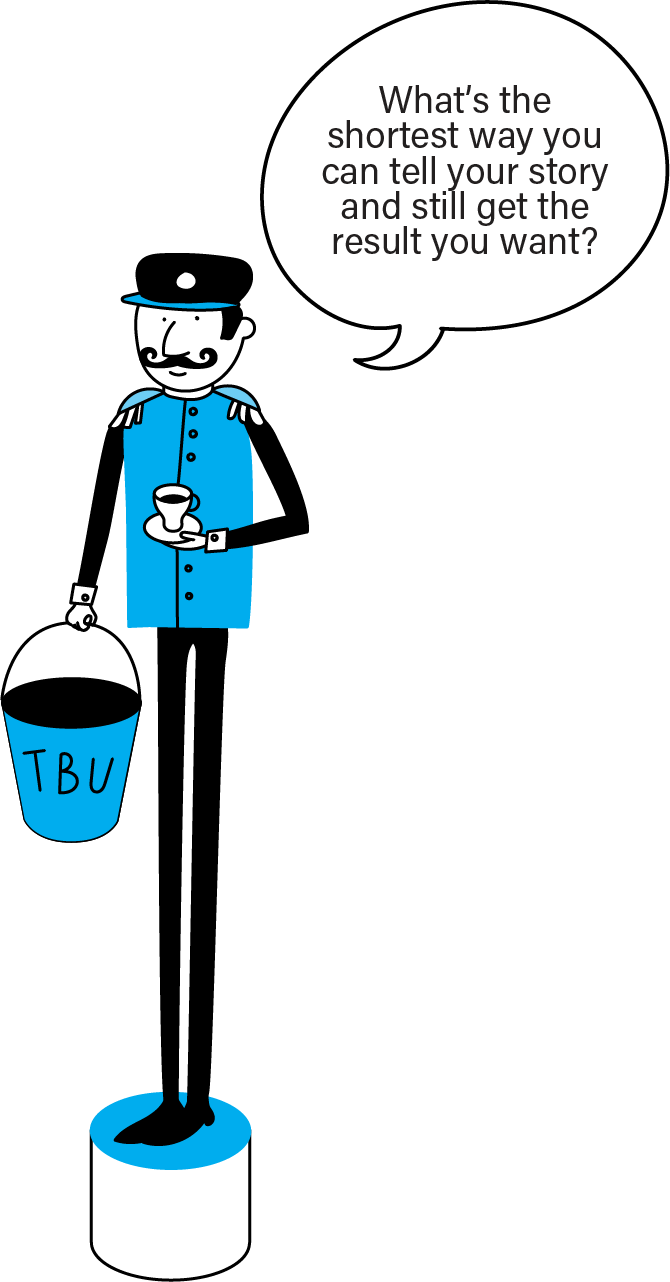
Meet the Relevance Inspector
So how do you get to the relevant information? That's what Clarityville is designed to help you do. The process slows you down (painful, I know, but totally worth it) and asks you questions. By going through it, you work out what success looks and feels like, who your audience is and what you are trying to communicate. You find out what your audience must know, so you can easily spot what to say and what to leave out.
This is what Fergal Conlon from West Cork Development Partnership had to say about Clarityville:
“Before Clarityville, we were less structured in how we came up with ideas. Coming through the process, there’s a good consensus amongst our team as to what it is we’re trying to do. It helped us be clear about our common mission, and everything that goes with it now has a focus that’s relevant to that mission. What surprised me was the visual side. I’m not a visual person, but it let team members contribute in more creative ways, with a new perspective. If you’re a wordy person or a numbers person, visuals add another dimension, and other people come forward. If you want your team on the same page and working together, I’d recommend it. Taking the time to go through the process means you deliver faster later on.”
Before starting to work on any messaging, whether it's a presentation, a website or launching a new product, I invite you to imagine that whatever you're trying to communicate has been communicated in the best way possible. It could be that you delivered your presentation and people are waiting in line to talk with you; the new website is launched and getting lots of traffic; your post on LinkedIn is getting high engagement, and emails are streaming in asking to book your services. However you're trying to communicate - it worked. Now ask yourself: How do I know it is successful? What is my audience doing? How are they feeling? What did they need to know to feel and act this way?
When working on your messaging, keep going back to look at your answers and ask: Will what I'm saying get my audience to act and feel in a way that will deliver what I want? If not - it's TBU, True But Useless information; make sure you leave it out.
This exercise is the first step of Clarityville, and I'm teaching the whole process for the first time. The Clarityville training is for people who hold the responsibility for how their business or team communicates and want to do it themselves rather than hand it over. By the end, you will be able to apply Clarityville to anything you create and see results, whether you create content on your own, with a designer or with AI. The training will run in person in Clonakilty and online in January 2027. Register your interest by filling this form.
In the meantime, try the exercise on the next thing you need to say. Before you write a word, ask yourself: what’s the shortest way I can tell my story and still get the result I want?
Thank you for reading my articles. I hope I was able to inspire or assist you in small ways. Subscribe to my Substack to get them in your inbox.