Drop the tool and save your life
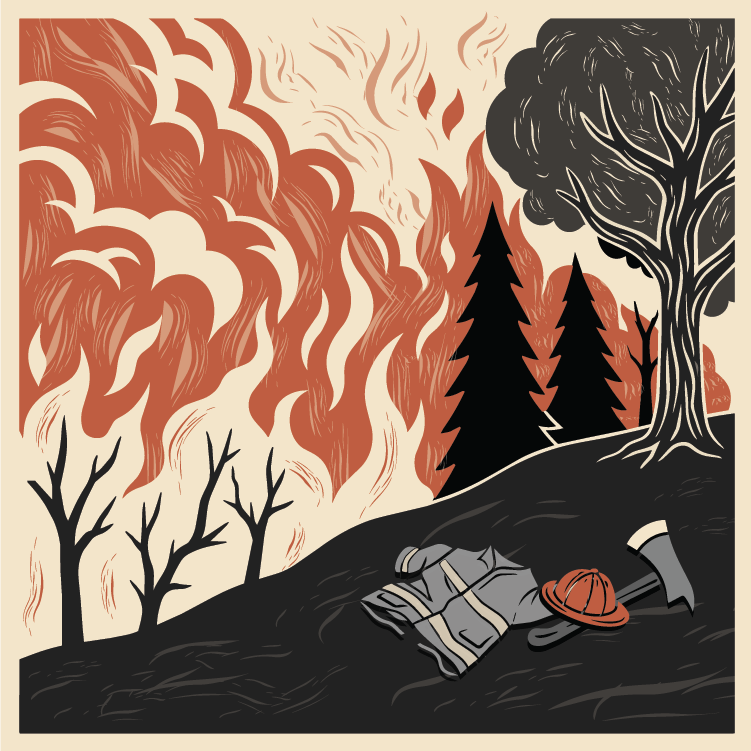
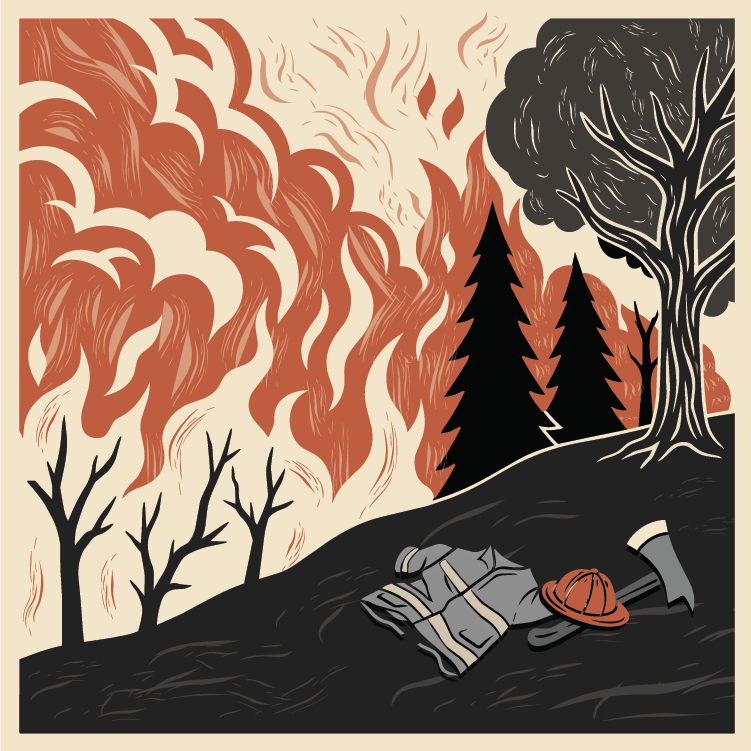
There's a story about wildland firefighters from David Epstein's book "Range." The firefighters train to fight wildfires. Their protocol states that when they are in danger, they have to drop everything: their heavy tools, their uniform, and run.
But what has been recorded again and again since the '90s is the surprising reality that, even when the command is clear and their lives are on the line, many firefighters choose to hold on to their tools and uniforms.
This choice often costs them their lives.
Why don't they save their lives? Epstein draws on the work of Karl Weick, an organisational psychologist who found that firefighting tools define firefighters' identities and give them a sense of belonging. The fire axe, the saw, the shovel become extensions of their bodies. One firefighter shared that only after running a good few kilometres uphill did he realise he was still holding his heavy axe. Firefighters practise fighting fires; their identity is around running towards the fire, not running away from it. They weren't able to follow the command because it brought an existential crisis, asking them to drop their singular identity associated with their tools and uniforms.
And they are not alone. Many of us spend years building a narrow identity that holds our life together. And when it stops serving us, we hold onto it anyway, telling ourselves the same story about who we are, even when all evidence says we'd be better off dropping it. We hope for the best; we tell ourselves: "it will be grand"; we ignore any signals or advice that following the familiar path would result in a crisis.
I shared this story with my clients and asked:
"What are you holding onto that, if you dropped, would let you move forward with more ease?"
And people shared with me the "tools" they wished to drop. The tools were different, and yet familiar. The examples below are based on the conversations I've had. Names and details changed.
Alex, a musician, would like to drop his people-pleasing habit and the expectation to be only a musician. Without these, "I'd feel freer, curious, malleable. I'd be willing to make mistakes, I'd be childlike, in a really good way."
Sam, a business owner, wished to let go of the fear of what other people think; fear of being judged as having "notions" was a common thread of many of the answers I heard. Sam said, "I stop myself from dreaming big because I think I'll be regarded as big-headed." Without the fear, she would be free to "sing from the rooftops!"
Gwen, who sold two successful businesses and is in the process of starting a third, wished to drop always chasing the hardest, most disruptive version of everything, the need to be "the cutting edge" - instead she'd want to feel more connected, and enjoy the simple things.
My own answer is "doing." I come from generations of doers. My great-grandmother ran a farm and raised twelve children alone while her husband was stranded abroad for seven years during the war. My grandmother and my mother continue her legacy, never taking a relaxing holiday. I built a career as a communication consultant on the same instinct: bring me the chaos, I'll organise it, I'll hold it, I'll do it. By expanding beyond the doer identity, I found a base for my coaching career. As a coach, I don't need to "do," but hold space for my clients to find their own path. And unlike my ancestors, I now can enjoy a lazy day on the beach.
The need to change and expand our identity comes to all of us in so many ways: from starting a business, giving birth or losing a loved one, to advancements in technology and AI that are forcing many to rethink their careers overnight. Whatever the shape of it, the same inner judge tends to show up with "what's wrong with you?" or "It's easier for everyone else!". The firefighter's story helped me to remember that dropping the familiar and trusted "tools" is never easily done, and I don’t even have blazing fire to force my hand.
So if you feel stuck in business or life, answer the same question I asked my clients:
What are you holding onto that, if you dropped, would let you move forward with more ease? And how would you know you dropped it? What would be different?
Before answering the question, ground yourself. Take a deep breath and let it out slowly. Tune into your body. This will help you tap into a deeper sense of knowing. Feel your feet touching the ground, the clothes touching your skin. Pay attention to any words or images that come to mind. Stay open and curious.
Set a five-minute timer and write or draw. Let yourself be surprised by what emerges on the page.
Did you resonate with the article and feel ready to expand your identity and business?
I’d love to work with you. Coaching sessions run for 75 minutes and cost €95.
Click here to book a free discovery call or email me